How to Learn Graphic Design from Scratch: A Step-by-Step Roadmap
How to learn graphic design from scratch in 2026: a step-by-step roadmap with what to learn first, daily practice, AI tools and getting your first job.
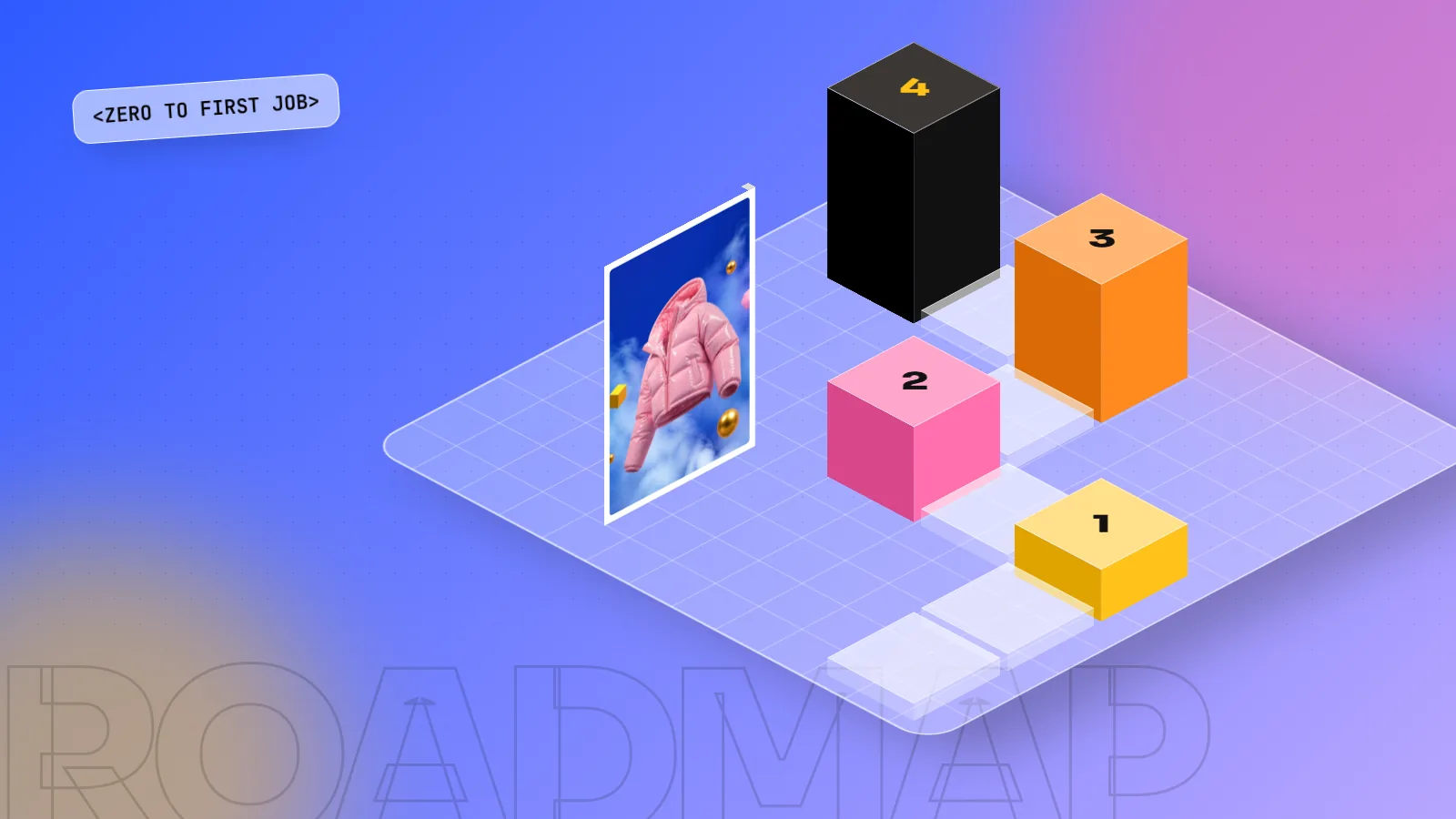
To learn graphic design from scratch, start with the basics of colour, typography and layout, then learn Photoshop, Illustrator and InDesign one at a time while copying and remaking real ads. Add AI tools once you can judge good design. Practise daily on small briefs, get feedback and build 4 to 6 portfolio projects. Most learners need about 6 months of steady practice.
You do not need art school, a fancy laptop or the ability to draw to start. You need a clear order of what to learn and the habit of practising every day. This roadmap shows how to learn graphic design from scratch in 2026 and how to become a graphic designer step by step, the way we would plan it for a new student at our South Extension institute.
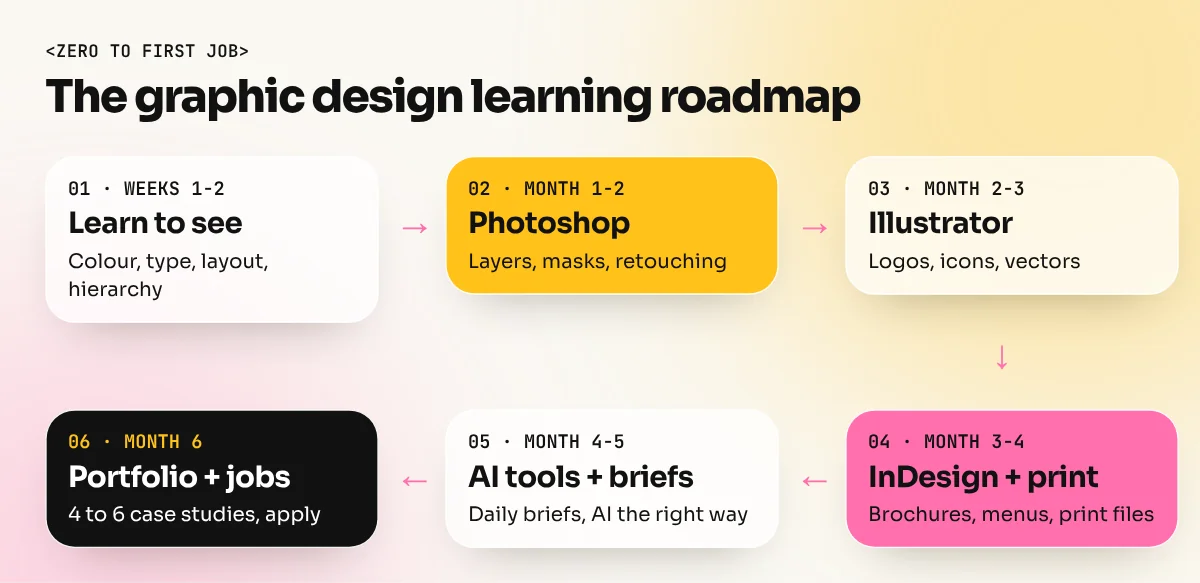
Step 1: Learn to see before you learn software
Most beginners open Photoshop on day one. That is backwards. Spend your first two weeks on the ideas every tool depends on:
- Colour: why some colours feel cheap and others premium, contrast and how brands pick 2 or 3 main colours.
- Typography: the difference between serif and sans serif, why two fonts are usually enough and how size and weight create order.
- Layout: alignment, white space and grids.
- Hierarchy: what someone reads first, second and third.
Daily exercise: pick one ad you see on a hoarding or Instagram. Write down what you read first, the colours used and why. Ten minutes a day trains your eye faster than any tutorial.
Step 2: Learn one tool at a time
Do not try to learn every app together. Learn them in this order:
| Order | Tool | Why this order |
|---|---|---|
| 1 | Adobe Photoshop | Almost every design job uses photos |
| 2 | Adobe Illustrator | Logos and icons must be vectors |
| 3 | Adobe InDesign | Brochures, menus and print files |
| 4 | Canva and AI tools | Speed, once you can judge design |
For each tool, learn the 20% of features you will use 80% of the time. Read Photoshop vs Illustrator vs Canva to see exactly where each one fits.
Step 3: Copy, then remake
Copying great work is how designers have always learned. The rule is simple: copy to practise, never to publish.
- Pick a well-designed poster or social post.
- Rebuild it exactly in Photoshop or Illustrator. You will discover spacing and type details you never noticed.
- Now remake it for a different brand, keeping the layout idea but changing everything else.
Step 3 is where your own style starts.
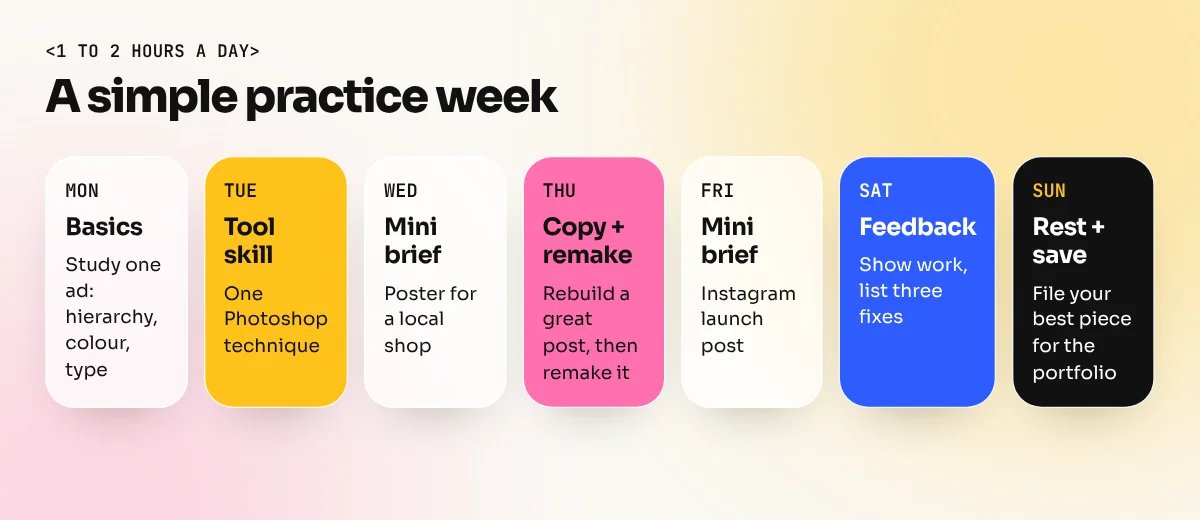
Step 4: Practise with small briefs every day
Real design starts with a brief. Give yourself small ones:
- A poster for a Delhi chai stall's new winter drink.
- An Instagram post announcing a gym's opening offer.
- A logo for a home bakery.
- A menu for a 10-dish café.
Keep each one to 1 or 2 hours. Speed matters, because client work has deadlines. Save everything; some of these will become portfolio pieces.
Step 5: Add AI tools, the right way
Once you can tell good design from bad, add AI. Use it to explore ideas, extend photos and make quick variations. Then finish the design yourself with your own typography and layout. If you start with AI before learning basics, you will not know when its output is wrong. Our guide to the best AI tools for graphic design explains which tool to use for which job.
Step 6: Get feedback
This is the step self-learners miss most. Design improves fastest when someone experienced points at your work and says "this headline is too small" or "these two colours fight". Ways to get feedback:
- A trainer or mentor who reviews your work every week.
- Designer friends or online design communities.
- Showing work to the people it is meant for and watching their first reaction.
Step 7: Build a portfolio and apply for your first job
After around 6 months of steady practice, choose your best 4 to 6 projects and present them as short case studies. Our step-by-step guide on how to make a graphic designer portfolio with no experience covers this in detail. Then apply to agencies, printing firms, brands, e-commerce companies and startups and keep making new work while you apply.
Mistakes that slow beginners down
- Tool hopping: switching apps every week instead of mastering one.
- Only watching tutorials: an hour of watching should mean an hour of making.
- Too many fonts and colours: restraint looks professional.
- Skipping print: many Delhi agencies and printers still need print-ready files.
- Working alone too long: without feedback, mistakes become habits.
Learn faster with a trainer
You can follow this roadmap on your own. If you want structure, feedback every class and placement help, our 6-month graphic design diploma follows the same path, 1-to-1, in South Extension or live online. Just finished school? See the graphic design course after 12th. To see what each month covers, read our graphic design course syllabus.
Frequently asked questions
Can I learn graphic design on my own?
Yes, many designers start alone with free videos and daily practice. The hard part is feedback: without someone reviewing your work, it is easy to repeat the same mistakes. A course or a mentor speeds this up.
How long does it take to learn graphic design?
The basics take a few weeks. Becoming job-ready usually takes around 6 months of regular practice, including time to build a portfolio. Practising daily matters more than the total months.
Do I need a laptop to learn graphic design?
For real work, yes. A laptop or desktop with at least 8 GB RAM (16 GB is better) runs Photoshop and Illustrator well. You can start the basics on paper and on a phone, but jobs need desktop software.
Can I learn graphic design after 12th without a degree?
Yes. Studios and agencies hire on portfolio and skills. A degree helps for some jobs, but a strong portfolio is what gets most junior designers hired.